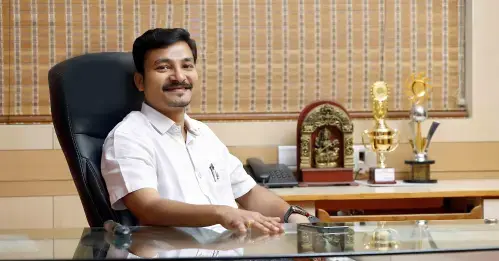
Diabetic Retinopathy: A Silent Blindness – Dr. Sreekanth P Namboothiri
Read More
Treat Diabetic Retinopathy the Ayurvedic way
Diabetic retinopathy is an eye condition that can cause vision loss and blindness in people who have diabetes. The four stages of retinopathy can be classified as minor, moderate, severe, very severe.
At first, diabetic retinopathy might cause no symptoms. As the condition progresses, you might develop:
Anyone who has type 1 or type 2 diabetes. The longer you have diabetes and the less controlled your blood sugar is, the more likely you are to develop this eye complication. Over time, more than half of people with diabetes will develop diabetic retinopathy.
High blood sugar. Too much sugar in your blood damages blood vessels. The damage to your eyes starts when sugar blocks the tiny blood vessels that go to your retina, causing them to leak fluid or bleed.
Managing diabetes is the best way. Keep your blood sugar levels in a healthy range. Get regular physical activity. Eat healthy. If you are seeing a doctor carefully follow their instructions.
Many patients with type 1 diabetes for over 20 years develop diabetic retinopathy despite maintaining good control over their blood sugar levels.
As a diabetic, see your eye doctor for a yearly eye exam — even if your vision seems fine. Contact your doctor right away if your vision changes suddenly or becomes blurry, spotty or hazy.
Sreedhareeyam’s Ayurvedic approach is bi-dimensional. Control diabetes while the treatment is being administered. Each individual patient is different. Based on the specific conditions unique to each individual, a case by case internal and external therapeutic procedures are used to effectively treat diabetic retinopathy.
Detoxification therapy to remove excess blood sugar. Eye nourishment therapy to improve blood circulation. Medication to rejuvenate blood vessels and optic nerves. And an ocular treatment regimen to minimise post treatment inflammation and relapse.
Retinitis Pigmentosa. Refractive Errors (Myopia, Hyperopia, Presbyopia, Astigmatism) Age-related macular degeneration, (ARMD). Glaucoma. Diabetic Retinopathy. Optic neuropathy/Toxic Optic neuropathy. Uveitis. Keratoconus. Squint. Cataract. Eales disease. Chronic dry eye. Amblyopia. Branch retinal artery occlusion. Branch retinal vein occlusion. Central retinal artery occlusion. Central retinal vein occlusion. Central serous retinopathy. Conjunctivitis. Cystoid macular edema. Hypermetropia. Optic atrophy. Optic neuritis. Retinal detachment. Retinopathy of prematurity.
Arthritis. Other Musculoskeletal Disorders. Diabetes Mellitus. Diabetes Neuropathy. Skin Disorders Varicose veins. Gynaecological Disorders. Mental Illnesses. Respiratory disorders. Spondylosis Gastrointestinal disorders. Low back ache. Sciatica. Dementia. Gout. Lifestyle disorders. Dementia etc

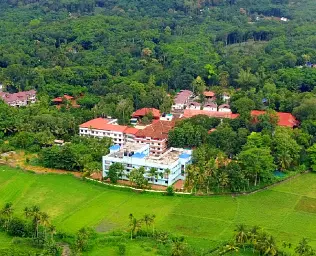
Situated on 50 acres of breathtakingly beautiful natural landscape, at Koothatukulam, Kochi, Kerala.

350-bed super specialty Ayurvedic eye hospital. Attracts patients world-wide. On average it treats 52,000 out patients and 4800 in-patients annually.

Incorporates one of India's most modern optometry labs for diagnostics.
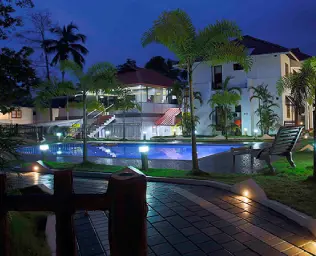
In-patient accommodation includes luxury villas, cottages, A/C rooms, non A/C rooms, and dormitories.

Features a vegetarian food court with A/C dining room and a provisions store. Serves fresh, hygienic food, cooked on site.
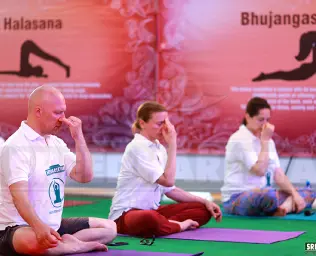
Contains a Yoga club under the expert guidance of masters for patients and bystanders.
Newsroom
Ayurvedic eye treatment helped heal my eyes, after Western doctors declared my condition 'untreatable'.
Read More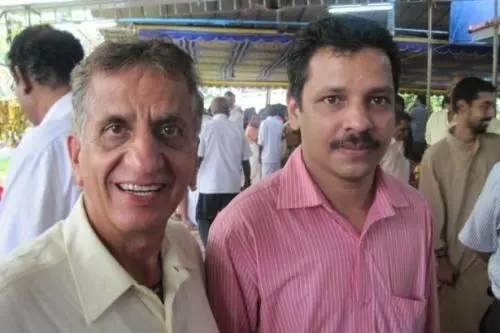
At AYUSH summit, PM Modi tells how Ayurveda helped ex-Kenyan PM’s daughter regain eyesight “It has been a struggle since I lost my vision in 2017. I have been to China and other countries and undergone various treatment modalities like acupuncture. Nothing seemed to have helped,” says Rosemary Odinga, daughter of former Kenyan Prime Minister Raila Odinga. “I just heard PM Modi call out my name and ask, ‘Rosemary, are you here?’ I said yes and stood up,” said Rosemary Odinga, the 44-year-old daughter of former Kenya Prime Minister Raila Odinga. Prime Minister Narendra Modi on Wednesday narrated how, at a recent meeting, the former Kenyan PM told him about the trauma his daughter suffered when she lost her vision a few years ago. Underlining the growing global acceptance of traditional Indian medical systems, the prime minister added that Ayurvedic treatment in India helped restore Rosemary’s eyesight. “You can imagine the shock and suffering that a person faces on losing his or her eyesight,” Modi told the audience after inaugurating the three-day Global AYUSH Innovations and Investment Summit in Gandhinagar. He added, “As a father, Odinga searched high and low, went to various places, but the attempts were unsuccessful. Finally, he found some promise here in India. Recently, he met me. It was a Sunday and Odinga is my dear friend. He had become so emotional and spoke about their struggles after his daughter, post-surgery, lost her vision. After receiving treatment in India, she has regained her vision and her father told me that those were the golden moments when she could see.” Bemused by all the attention on her at the event, Rosemary, who met Modi after his speech, told The Indian Express, “I did not understand what he was saying but am extremely excited to be here. This is my testimony of how a traditional system of medicine has helped people from other countries, and yes helped me regain my vision.” Rosemary, accompanied by Kenya Medical Research Institute’s Chief Research Officer Dr FM Tolo, also ran into her doctor N Narayanan Namboothiri, the chief physician at the Sreedhareeyam Ayurvedic Eye Hospital and Research Centre in the town of Koothattukulam in Kerala’s Ernakulam district. The 44-year-old, who works for a Cabinet secretary in Kenya but prefers to be identified as a snail farmer, lost her vision in 2017 after suffering a brain aneurysm that placed stress on her optic nerve. After trying treatments that did not work, she visited the hospital in Kerala two-and-a-half years ago. “I am so happy. Before I regained my vision, I followed his voice and heard his instructions,” Rosemary said, referring to Dr Namboothiri. “I have now met him after a while. It had been a struggle since I lost my vision in 2017. I went to China and other countries and underwent various treatment modalities like acupuncture. Nothing seemed to help.” Dr Narayanan told The Indian Express that Rosemary’s eyesight weakened considerably after the aneurysm because of optic nerve atrophy. “There was no clear visibility. To strengthen and rejuvenate her optic nerve, we took up pure Ayurvedic treatment. This included giving her traditional oral Ayurvedic medication and massages around the eyes. There were other procedures like taila dhara and others. She underwent two sessions that lasted three weeks — the first session was two-and-a-half years ago,” he added. Rosemary continued with the medication during the pandemic and followed it up with more treatment sessions upon her return. Slowly, her vision returned. She said her treatment was still going on and there was room for improvement. “My father met the PM and was full of praise for the traditional Ayurvedic system that has helped me. He also discussed bringing traditional medicines to Africa,” added Rosemary, who will speak at the summit about her experience.
Read More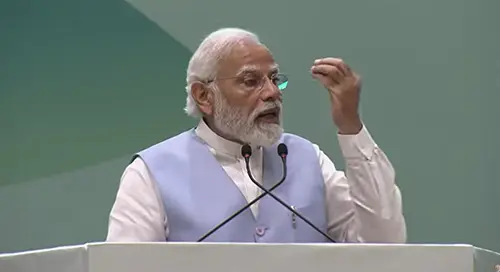
Ahead of its foundation day fete on Thursday, CSIR’s National Institute for Interdisciplinary Science and Technology (NIIST) has signed an agreement with Sreedhareeyam Ayurvedics and eye care hospital Koothattukulam for modernization of its Ayurvedic drug manufacturing facility to develop new products for health care application. Currently the company is running a specialized Ayurvedic Eye Hospital and Research Centre as well as a production facility and this collaboration with CSIR NIIST is intended to assure quality and authenticity for the existing products as well as for diversification into the functional foods and neutraceuticals. After inking the agreement on last Friday, CSIR-NIIST director Dr. A Ajayaghosh told TOI that he had commended the efforts of the company to make use of modern technology to develop new scientifically validated products ensuring quality. Sreedhareeyam managing director Hari N Namboothiri who signed the agreement on behalf of the company expressed that the collaboration with the national institute will be a boon to the Ayurvedic industry. “In offering traditional ophthalmic solutions for eye care, we have the modern diagnostic tools and facilities to document the results of ayurvedic treatment. Now, this will be a step ahead to upgrade its Ayurvedic health care product manufacturing facility through modern scientific collaborative research,” Hari Namboodiri said. CSIR-NIIST senior scientist M Sreekumar told TOI that use of modern scientifically technology in the preparation of traditional ayurvedic medicines can help in improving its efficacy, product quality and shelf life. In about six months, the ayurvedic products and equipment will be shortlisted and updated accordingly, he said. For instance, from an ingredient pepper, its extracts are taken for preparing Ayurvedic medicines by grinding it for 90 days to make fine granules. Once the particle size is ascertained, with modern scientific tools grinding can be completed in 10 days and the fibrous waste generated contains active ingredients which can be used for developing food products. Thus it can help reduce the cost, improve efficacy and check wastage, he said.
Read More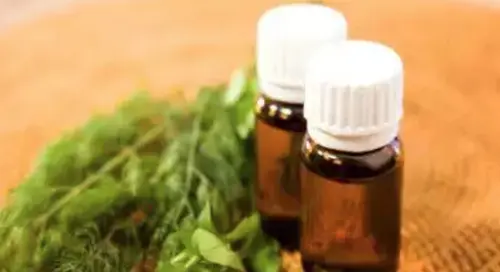
Blogs
Diabetic Retinopathy: A Silent Blindness – Dr. Sreekanth P Namboothiri
Read More
Computer Vision Syndrome
Read More
Keratoconus – What you need to Know?
Read MoreTestimonials

Fabulous experience at this place. First of the great ambience and feel at home. Doctors were amazing and down to earth and caring individuals. Moreover the nursing staff including the management staff were very polite and caring. I liked their professionalism and well planned care plan and patient care. I feel the commendable improvement within two weeks. Food was delicious. On the whole it was a wonderful experience with reasonable rate. I highly recommend to use this facility. Thank you for taking care of me.

In Sreedhareeyam, the moment the patient sees the face of the doctor itself he feels 25% relief and the rest after consultation with the doctor. The staffs are so good. Can't express. Very good atmosphere . Very neat and clean. Very good system. On top of everything, the treatment is very effective.

Nice Experience with the power of Ayurveda, Best treatment for Glaucoma. Excellent !! Nothing much to describe about the medical treatment and hospitality. Good results through the way of Ayurveda treatments. Thank You again

Thanks for all your support & hospitality. Helpful,experienced and supportive doctors/ staff. Good facilities and environment. All latest Diagnosis equipment. Very neat place, trustworthy doctors & safely does treatment for kids also
We use cookies that are necessary for the smooth operation of the website, to improve our website and to display advertising relevant to you on social media platforms and partner websites. By clicking "Accept all", you agree to the use of cookies for convenience features and statistics and tracking. You can change these settings again at any time. If you do not agree, we will limit ourselves to technically necessary cookies. For more information, please see our privacy policy .